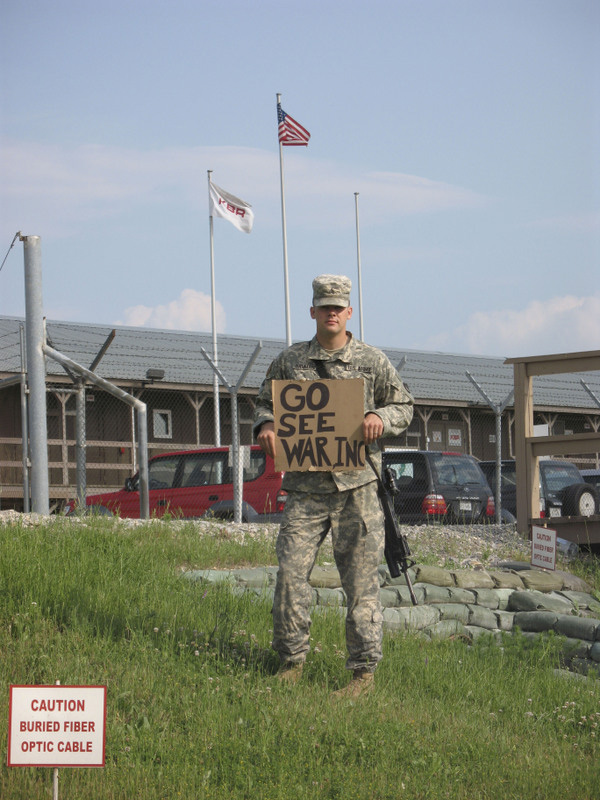
Friday, July 25, 2008

since we have recently had a dispute over chronology of the surge....

...
I thought this might be a relevant post

  • In a presentation yesterday at the American Enterprise Institute, escalation architect Frederick Kagan repeated his claim that sectarian cleansing has not affected the drop in violence in Iraq. Kagan called it a “myth”:

The bad news from this perspective is that the sectarian areas of Iraq is still mixed. The good news is that the sectarian areas of Iraq are still mixed. And there is a myth out there that the violence has fallen because all of the cleansing is done. That is absolutely not the case.

  • Watch it:

One of the persistent myths about the reasons for the success of coalition efforts in 2007 is that the killing stopped because the sectarian cleansing was completed. This myth is absolutely false. Baghdad remains a mixed city. The traditionally Sunni neighborhoods of Adhamiya, Mansour, and Rashid remain predominantly Sunni, and Shiite enclaves in East Rashid remain Shiite. Shia have moved into some parts of the Sunni neighborhoods, and many sub-districts within neighborhoods that had been mixed are now much more homogeneous. But the key components of a mixed Baghdad remain.

  • Kagan’s claim is contested by major news organizations and the U.S. military’s own data. In December 2007, the Washington Post published the maps below, comparing the sectarian make-up of Baghdad’s neighborhoods in April 2006 and November 2007, and revealing the transformation of the city resulting from sectarian cleansing:
baghdad.gif

Tuesday, July 22, 2008

more problematic than his belief that Iraq and Pakiston share a common border

  • McCain keeps boasting about being "right" about the "surge" and saying Obama was "wrong."
  • Look, it is more important that McCain was consistently wrong. He was wrong about the desirability of going to war against Iraq. He was wrong about it being a cakewalk. He was wrong about there being WMD there. He was wrong about everything. And he was wrong about the troop escalation making things better. The casualty figures dropped in al-Anbar, where few extra US troops were ever sent. They dropped in Basra, from which the British withdrew. Something happened. Putting it all on 30,000 extra troops seems a stretch. And what about all the ethnic cleansing and displacing of persons that took place under the nose of the "surge?" McCain has been wrong about everything to do with Iraq. And he is boasting about his wisdom on it! (Juan Cole, Informed Commment, July 22, 2008, "Troop Agreement Misses Deadline; Provincial Law Misses Deadline; Bombings in Mosul, Diyala, Fallujah")

Sunday, July 20, 2008

bombing is never a shortcut to winning hearts and minds

At least 13 Afghan police and civilians have died in two incidents involving international forces, officials say.

Generic pic of international soldier in Afghanistan
International forces have been involved in a series of controversies of controversies

Four Afghan police and five civilians died in an apparently mistaken air strike by international coalition forces in Farah province.

Separately, the Nato-led Isaf said it had "accidentally" killed at least four civilians in Paktika province. (BBC, 20 July 2008, "Coalition 'bombs Afghan police'")

Saturday, July 12, 2008

why wasn't this on the tv news; in the newspapers, etc?

People carry photos of the anti-American cleric Muqtada al-Sadr during a protest in Baghdad's Shiite stronghold of Sadr City, Iraq, Friday, July 11, 2008. (AP Photo/Karim Kadim)

BAGHDAD (AP) — Hundreds of followers of a radical Shiite cleric in Iraq have taken to the streets to protest a proposed security agreement between Iraq and the United States.

The supporters of cleric Muqtada al-Sadr say the proposed deal would lead to a permanent U.S. occupation of Iraq.

They held their protest Friday in the southern city of Kufa and shouted slogans such as: "No to America."

Such demonstrations have become a weekly event, usually following prayers held in local mosques on Fridays. (AP, "Some Iraqis protest security deal with US," 11 July 2008)

Monday, July 07, 2008

Things are better; can we go now?

Iraqi PM Nouri Maliki
It is the PM's first public suggestion of a deadline for US withdrawal from Iraq

Iraqi Prime Minister Nouri Maliki has raised the prospect of setting a timetable for the withdrawal of American troops from Iraq.

Talks are continuing on a new security deal, but the US has said it opposes setting any timetable for withdrawal.

The UN mandate under which US troops stay in Iraq expires at the end 2008.

Correspondents say Mr Maliki may have an easier time getting the support of Iraqi MPs by proposing a deal which includes a withdrawal timetable. (Monday, 7 July 2008 15:53 UK, BBC,"Iraq floats US pullout timetable")

Sunday, July 06, 2008

the surge is...

...fill in the blank.

Here is the point: the surge of a 21st army against pipe-bomb insurgents will always "work," in the short run. An invading/conquering army has control of the air, the main arteries, and backup. Insurgents have..., well, time. Until the sides talk and recognize each other's strengths, then the situation that produced the insurgency--lack of jobs, ethnic cleansing, etc.--continues. Of course, the Maliki government will announce the success of the current program, because their continued "success" depends on American, well, continuance. Yet:
  1. The insurgency is mainly against American targets, and our allies. Don't we expect at least some decline if those targets are no longer there?
  2. The main reason for the decline in violence has little to do with our troops, and everything to do with walls, surveillance, etc., which has resulted in a MORE balkanized Baghdad, and a more balkanized Iraq. Which means, of course, that what we claimed we are fighting for (well the fourth attempt to explain what we were fighting for; remember: Get rid of WMD's?--fake; stop Saddam Hussein from providing safe haven for Al Qaeda?--fake; bring democracy to the Middle East?--fake {and ludicrous}), that is, a stable, unified government is, get this, NEVER GOING TO HAPPEN. Three separate governments, yes; three governments unified in a very loose federation, possibly. But the only thing these folks are unified in, is, that US troops need to leave. Now.
  3. The longer we stay, the strong Iran is in the region.

'Weak institutions'

Millions in development money have notoriously gone to waste in the seven years since the fall of the Taleban, the BBC's Alastair Leithead reports from Kabul.


Afghan people on improving life

Many countries spend a chunk of their aid through the government or on a trust fund set aside to fund National Solidarity Programmes in more than 22,000 districts of the country.

Mr Eide believes more should be spent this way.

In Kabul on Sunday, he will outline to the government and donors that they have got to be more co-ordinated and to deliver development more effectively and efficiently.

"We also have to see how we can spend our money in a way that builds Afghan capacity," he said.

"We see how weak the institutions are - that we have to make sure we correct."

Corruption is a major issue and the words auditing and accountability will be buzzing around the room at the first monitoring board meeting since the Paris conference, our correspondent says.

The UN head in Afghanistan is trying to take control of an aid effort that many think has been missing the mark, when winning people over to the government, and keeping the Taleban at bay, is so vital for the future, he adds. (Sunday, 6 July 2008 07:27 UK, BBC, "UN to urge revamp of Afghan aid")

Monday, June 23, 2008

thought for the day

from "[Rick] Shenkman: Why the American People Were So Easily Bamboozled by the Bush Administration," in Informed Comment, by Juan Cole, Monday, June 23, 2008

  • As we head into the Fall campaign and listen to the debates about the war we should keep in mind the limits of public opinion. If we don't begin to address the problem of gross public ignorance there will be more Iraqs.
  • One poll finding we should all keep in mind is this. Even after the 9/11 Commission reported that there was no connection between Saddam Hussein and the Sept. 11 attack 50 percent of the country persisted in believing there was. The implications of this are mind boggling.

Wednesday, June 18, 2008

as Queen Anne said after the latest battle victory and loss of life in the War of Spanish Succession....

...How many more victories can we take?

  • Defence Secretary Des Browne said: "We've had a very difficult time over the last 10 days. We've lost nine soldiers altogether in three separate incidents."
  • He added: "The Taleban are losing in Afghanistan, I know it may not appear like that at the moment, but we are enjoying a degree of success."
  • The latest deaths are the biggest single loss of British lives in Afghanistan since an RAF Nimrod crash in 2006 which killed 14 servicemen.
  • BBC News defence correspondent Caroline Wyatt said the feeling among British military leaders was that the Taleban were being outgunned and that their command-and-control was disintegrating.
  • The problem is that this has driven the Taleban to measures such as the latest explosion which are very difficult to defend against, she said. (18 June 2008, BBC, "Woman soldier among Afghan dead")

Tuesday, June 17, 2008

and what kbr wants....

  • The Army official who managed the Pentagon’s largest contract in Iraq says he was ousted from his job when he refused to approve paying more than $1 billion in questionable charges to KBR, the Houston-based company that has provided food, housing and other services to American troops.
  • The official, Charles M. Smith, was the senior civilian overseeing the multibillion-dollar contract with KBR during the first two years of the war. Speaking out for the first time, Mr. Smith said that he was forced from his job in 2004 after informing KBR officials that the Army would impose escalating financial penalties if they failed to improve their chaotic Iraqi operations.]
  • Army auditors had determined that KBR lacked credible data or records for more than $1 billion in spending, so Mr. Smith refused to sign off on the payments to the company. “They had a gigantic amount of costs they couldn’t justify,” he said in an interview. “Ultimately, the money that was going to KBR was money being taken away from the troops, and I wasn’t going to do that.”
  • But he was suddenly replaced, he said, and his successors — after taking the unusual step of hiring an outside contractor to consider KBR’s claims — approved most of the payments he had tried to block.
  • Army officials denied that Mr. Smith had been removed because of the dispute, but confirmed that they had reversed his decision, arguing that blocking the payments to KBR would have eroded basic services to troops. They said that KBR had warned that if it was not paid, it would reduce payments to subcontractors, which in turn would cut back on services. ("Army Overseer Tells of Ouster Over KBR Stir," The New York Times, by JAMES RISEN, June 17, 2008)

Saturday, June 14, 2008


meanwhile: not so clear sailing in Afghanistan

And as Juan Cole points out below, it is not at all clear that this was the Taliban instead of a more scary general insurgency.

  • Pushtun guerrillas mounting an insurgency against the Karzai government and against NATO troops in the Pushtun areas of Afghanistan staged a daring prison break on Friday. They set off bombs at a prison in Qandahar, killing 15 prison guards and allowing 1100 inmates to escape, including 400 captured guerrillas. Although the US refers to the guerrillas as 'Taliban' it is not clear that they are seminary students are actually linked to the Taliban movement of the 1990s. Many appear to be disgruntled Pushtun villagers.


  • The jailbreak spoke eloquently of the weakness and incompetence of the Karzai government, which many observers believe is in the process of collapsing under the weight of its own corruption.
  • The collapse seems to be accelerating even though the number of foreign troops in the country has grown enormously, to some 30,000 US and 30,000 NATO soldiers. Foreign donors recently pledged $20 bn in aid, though $10 bn of that came from the US and European donors seemed distinctly wary of having their money go into the pockets of the Afghan bureaucrats and those of their extended families.
  • In May, more US and allied troops were killed by guerrillas in Afghanistan than in Iraq. (JUan Cole, Informed Comment, "Saturday, June 14, 2008, Massive Guerrilla attack in Afghanistan; 4 Marines Killed")
i need to see this...soon (please come my way)

From Sgt. Brent Sammann, an active-duty soldier in the US Army:

Sgt. Brent Sammann, US Army
(Click for full-size image --
check out the two flags)
2008-06-13-IMG_0338_180.jpg
I'm a first-hand witness to the exploitation by KBR and other companies lending their services to the war effort -- services us soldiers are fully capable of doing ourselves.... The military is being overcharged by these companies on a regular basis. Also, the poor service and treatment we get from some of their employees who make three times as much as those of us serving our country that are not in it for the money but are trying to make the world a better place for everyone.

From SPC (P) Johnny Rhodes in 3/2 SCR Infantry based in Diyala, Iraq:

After being awake for 3 days I may be a little bit out of it, so excuse any rambling or incoherence on my part. Off the top of my head, I can easily say that KBR in particular is of no help here in my area of Iraq. They do, jobs soldiers could do, get paid way better for it, but the work is almost always substandard.... at any given time there are hordes of these guys tying up the phones and internet, cramming the chow hall, etc. Which makes the soldiers have to wait. And wait. And wait. They also paid way more than me, for a job, I could do with my eyes closed.

From Brenda Clampitt, of Baton Rouge, LA, the wife of a soldier stationed at Camp Adder in Tallil, Iraq:

[My husband] drives the trucks and Humvees and escorts the KBR around where they need to go. He doesn't understand why they get paid way more then he does when [he and his fellow soldiers] are the ones doing the protecting, and are the ones getting shot at and blown up. He has seen soldiers die in front of him; he has seen lives destroyed and the country torn apart. My husband would serve his country whether he got paid or not, that is just how he is. He loves his country and wants to protect it but he sees first hand what is going on over there and he doesn't like it.... I myself am sick and tired of this war. It is dragging on and on and it is all about the money. I am not anti war. But I am FOR everything your movie is about.


Today's lead editorial in the New York Times, titled "Interrogation for Profit," decries "one of the Bush administration's most blatant evasions of accountability in Iraq -- the outsourcing of war detainees' interrogation to mercenary private contractors" and calls on Congress to approve "measures to make war-zone contractors liable for criminal behavior." The editorial concludes: "The way out of the Iraq fiasco must include an end to the outsourced shadow armies."

This indictment has the same urgency of War Inc. Especially with John McCain reminding us that it's "not that important" to him when our troops come home. (from Arianna Huffington, "War, Inc: Cusack's Savage Satire Strikes a Chord with Soldiers and Their Families," June 12, 2008)

Tuesday, June 10, 2008

hookergate goes on and on

A BBC investigation estimates that around $23bn (£11.75bn) may have been lost, stolen or just not properly accounted for in Iraq.

  • For the first time, the extent to which some private contractors have profited from the conflict and rebuilding has been researched by the BBC's Panorama using US and Iraqi government sources.
  • A US gagging order is preventing discussion of the allegations.
  • The order applies to 70 court cases against some of the top US companies.

War profiteering

  • While George Bush remains in the White House, it is unlikely the gagging orders will be lifted.
  • To date, no major US contractor faces trial for fraud or mismanagement in Iraq.
  • The president's Democrat opponents are keeping up the pressure over war profiteering in Iraq.
  • Henry Waxman who chairs the House Committee on Oversight and Government Reform said: "The money that's gone into waste, fraud and abuse under these contracts is just so outrageous, its egregious.
  • "It may well turn out to be the largest war profiteering in history."
  • In the run-up to the invasion one of the most senior officials in charge of procurement in the Pentagon objected to a contract potentially worth seven billion that was given to Halliburton, a Texan company, which used to be run by Dick Cheney before he became vice-president.
  • Unusually only Halliburton got to bid - and won.

Missing billions

  • The search for the missing billions also led the programme to a house in Acton in West London where Hazem Shalaan lived until he was appointed to the new Iraqi government as minister of defence in 2004.

Judge Radhi Hamza al-Radhi
Judge Radhi al Radhi: "I believe these people are criminals."
  • He and his associates siphoned an estimated $1.2 billion out of the ministry.
  • They bought old military equipment from Poland but claimed for top class weapons.
  • Meanwhile they diverted money into their own accounts.
  • Judge Radhi al-Radhi of Iraq's Commission for Public Integrity investigated.
  • He said: "I believe these people are criminals.
  • "They failed to rebuild the Ministry of Defence , and as a result the violence and the bloodshed went on and on - the murder of Iraqis and foreigners continues and they bear responsibility."
  • Mr Shalaan was sentenced to two jail terms but he fled the country.
  • He said he was innocent and that it was all a plot against him by pro-Iranian MPs in the government.
  • There is an Interpol arrest out for him but he is on the run - using a private jet to move around the globe.
  • He stills owns commercial properties in the Marble Arch area of London. ("BBC uncovers lost Iraq billions," By Jane Corbin," BBC News, 10 June 2008)
lest we forget....

Some specifics from Rockefeller's statement (emphasis [Arianna Huffington's):

  • Statements and implications by the President and Secretary of State suggesting that Iraq and al-Qa'ida had a partnership, or that Iraq had provided al-Qa'ida with weapons training, were not substantiated by the intelligence.
  • Statements by the President and the Vice President indicating that Saddam Hussein was prepared to give weapons of mass destruction to terrorist groups for attacks against the United States were contradicted by available intelligence information.
  • Statements by President Bush and Vice President Cheney regarding the postwar situation in Iraq, in terms of the political, security, and economic, did not reflect the concerns and uncertainties expressed in the intelligence products.
  • Statements by the President and Vice President prior to the October 2002 National Intelligence Estimate regarding Iraq's chemical weapons production capability and activities did not reflect the intelligence community's uncertainties as to whether such production was ongoing.
  • The Secretary of Defense's statement that the Iraqi government operated underground WMD facilities that were not vulnerable to conventional airstrikes because they were underground and deeply buried was not substantiated by available intelligence information.
  • The Intelligence Community did not confirm that Muhammad Atta met an Iraqi intelligence officer in Prague in 2001 as the Vice President repeatedly claimed.

So much for the tired claim that "everybody in the world" agreed that Iraq had WMD, was a "grave and gathering threat," was in league with Al Qaeda, etc., etc., etc. (Arianna Huffington, "The Big Story You May Have Missed During the Obama v. Clinton Finale," June 9, 2008)

Saturday, May 10, 2008

My response to May 09, 2008, "Obama Needs a History Lesson," By Jack Kelly, from RealClearPolitics

Posted by: balkanization
Date: 05/10/2008 03:17PM

Sorry, Mr. Kelly, weak history on the part of the pundit on this one. Orwell made the point that one's enemies today are allies tomorrow in his 1984, written in 1948 -- get it? -- which is a date relevant to two of Sen. Obama's and your examples. Everyone concerned was aware that ally Russia/Joseph Stalin had been and could be an enemy. Still, as Churchill noted when asked why he a staunch anti-Communist would work with Stalin; he replied he would work with the devil himself, if he thought it could bring down Hitler faster. (Which means, of course, that your view, Mr. Kelly, also goes against Churchill's.)

The problem, of course, is that keeping to a hard-and-fast view of who the enemy is (dog-headed, enemy to mankind, eats babies, etc.) means living in a non-existent world. It means that we identify an enemy -- USSR invading Afghanistan for example -- and then support those resisting that enemy unreservedly -- weapons to the Taliban, etc., with little sense that roles can change. It turns out, in the real world, the enemy is not dog-headed, eating babies, etc. Diplomacy is as much a part of realpolitik as iron and blood.

Perhaps there is nothing all that new in what Sen. Obama said. But it makes a lot more sense that Mr. Kelly's Medieval mantras.

Friday, May 09, 2008

obama leads in superdelegates according to abc

I made the following post on abc (for some reason I don't know how to spell gaugeing):

Superdelegates want what is best for the party; but their best way of gauging that is to look at the popular vote and the pledged delegate count. Sen. Obama leads in those two categories and, oh yes, he leads in amount of money raised by large numbers of people sending in small amounts. Superdelegates are not directing this parade; they are simply joining in.

So Sen. Obama and his organization have shown they have the moxie to win. Sen. McCain and his policies will certainly benefit the super-rich; but the idea that John and Cindy are less elitist than Barack and Michelle is laughable. The latter might have more education; but folks, that used to be a good thing.

Monday, May 05, 2008

I appended the following to a petition for an inquiry demanded by John Kerry (at least I tried to; his website doesn't appear to work too well_.

I am quite concerned about the growth of what Eisenhower warned about: the growth of the military-industrial complex. Particularly egregious are no-bid and cost-plus contracts going to a small group of semi-private firms. If these firms are then "planting" the military support of policies that benefit the bottom line of these firms, this is EXACTLY what Pres. Eisenhower warned against. Separation of Public and Private when one is discussing War is just as essential as separation of Church and State.

The original:
  • Help get an investigation of the Pentagon pundit program

  • Nearly two weeks ago, the New York Times reported on a covert Pentagon plan in, “an effort to transform the analysts into a kind of media Trojan horse — an instrument intended to shape terrorism coverage from inside the major TV and radio networks." The goal of this program: get coverage favorable to Bush Administration policies.

  • But since that story, there's been little effort to find out more about this program, and essentially zero coverage of the revelation on television news.

  • With a near total blackout on the story from the television news networks, we need the American people to demand answers!

  • Co-sign the letter John Kerry wrote to the GAO demanding an investigation and help us get answers.

Tuesday, January 29, 2008

"President Bush should be out here watching this ramp ceremony to see what it is really like," said one soldier, who asked not to be identified.

"The people who created this war need to be thinking about the families of these 18-year-olds who are dying."

("Car bomb targets US patrol, kills Iraqi," By BRADLEY J. BROOKS, Associated Press Writers, 29 Jan. 2008)

it appears that the surge + arming sunni tribal militias = relative calm to one or two provinces. it does not appear if it can bring peace to the entire country. what about an expanded jobs program to rebuild the country, a pull-back to western anbar as usa interest are really in kuwait and saudi arabia, not iraq, and an acceptance of, well, balkanization? we already appear to have accepted ethnic cleansing in baghdad.

Thursday, December 13, 2007

reconstituting terrorist groups among our allies


Summer NIE estimate: "In some ways, the most startling assertion made was that al Qaeda has reconstituted itself in Pakistan. What is startling is that it appears to acknowledge that the primary U.S. mission in the war -- the destruction of al Qaeda -- not only has failed to achieve its goal, but also has done little more than force al Qaeda out of Afghanistan and into Pakistan." ("Week out of Focus: Washington, Iraq and Al Qaeda," By George Friedman, 17 July 2007, Geopolitical Intelligence Report, Stratfor)
diplomatic surge working: for now

U.S. Ambassador to Iraq Ryan Crocker met Aug. 6 with Iranian Ambassador to Iraq Hassan Kazemi Qomi and Iraqi National Security Adviser Muwaffaq al-Rubaie. Separately, a committee of Iranian, Iraqi and U.S. officials held its first meeting on Iraqi security, following up on an agreement reached at a July ambassadorial-level meeting. ("The Major Diplomatic and Strategic Evolution in Iraq," By George Friedman, 8 July 2007, Geopolitical Intelligence Report, Stratfor)

Thursday, November 01, 2007

there's a war going on, you know

article 3 of convention iii of the Geneva Conventions (1949 and subsequent):

  • Art 3. In the case of armed conflict not of an international character occurring in the territory of one of the High Contracting Parties, each Party to the conflict shall be bound to apply, as a minimum, the followingprovisions:
  • (1) Persons taking no active part in the hostilities, including members of armed forces who have laid down their arms and those placed hors de combat by sickness, wounds, detention, or any other cause, shall in all circumstances be treated humanely, without any adverse distinction founded on race, colour, religion or faith, sex, birth or wealth, or any other similar criteria. To this end the following acts are and shall remain prohibited at any time and in any place whatsoever with respect to the above-mentioned persons:
  • (a) violence to life and person, in particular murder of all kinds, mutilation, cruel treatment and torture...;(c) outrages upon personal dignity, in particular, humiliating and degrading treatment;
  • (d) the passing of sentences and the carrying out of executions without previous judgment pronounced by a regularly constituted court affording all the judicial guarantees which are recognized as indispensable by civilized peoples....
  • An impartial humanitarian body, such as the International Committee of the Red Cross, may offer its services to the Parties to the conflict. (Convention (III) relative to the Treatment of Prisoners of War. Geneva, 12 August 1949.)
Highlights of Pres. G.W. Bush's speech, Thursday, 1 Nov. 2007, to the Heritage Foundation
  • We are at war. And we cannot win this war by wishing it away or pretending it does not exist....

  • in a time of war, it is vital for the president to have a full national security team in place. And a key member of that team is the attorney general....

  • The attorney general is the highest ranking official responsible for our law enforcement community's efforts to detect and prevent terrorist attacks here at home....

  • As a price for his confirmation, some on that committee want Judge Mukasey to take a legal position on specific techniques allegedly used to interrogate captured terrorists.

  • As Judge Mukasey..., he does not know whether certain methods of questioning are, in fact, used, because the program is classified. And therefore, he is in no position to provide an informed opinion. He has not been read into the program and won't until he is confirmed and sworn in -- won't be until he's confirmed and sworn in as the attorney general.

  • Second, he does not want an uninformed opinion to be taken by our professional interrogators in the field as placing them in legal jeopardy. (November 1, 2007, President Bush's Remarks on the Global War on Terror, by President George W Bush)

a few fact checks:
  1. It is a "war." the POTUS says so, we all agree it is, therefore the combatants have to be treated as if they are in a war.
  2. Among those acts which are prohibited by the Geneva Conventions to which we are a signatory are those upon combatants who have been taken prisoner and have laid down their weapons (whether or not they were official combatants or not) are: "cruel treatment and torture...[and]outrages upon personal dignity, in particular, humiliating and degrading treatment."
  3. Are own special forces are taught to insist upon their rights by convention iii of the Geneva Conventions if they are captured.
  4. Everyone know what water-boarding is; it is not some secret, classified process. You can watch it on the web by someone who went through this as what might be done by an evil enemy when he was in the military.
  5. So why the hell can't we ask a potential attorney general if he thinks that there are some specific processes which are illegal?
  6. And why in a war, especially in a war, in which our boys are in harms way, are we suggesting that the procedures for proper war conduct need not apply? If it can help our boys just once to be captured by an enemy who notes, well they are obeying the Geneva Conventions, and we know that those who don't will sooner or later be brought to trial, perhaps we won't do this, then subscribing to the Geneva Conventions has served its purpose.
but, 'nuff said. this is just crazy talk.

Sunday, October 14, 2007

first time they said "things will be better in six months" that i actually believed them
  • U.S. and Iraqi officials are negotiating Baghdad's demand that security company Blackwater USA be expelled from the country within six months, and American diplomats appear to be working on how to fill the security gap if the company is phased out. ("U.S., Iraq discusss Blackwater expulsion," By STEVEN R. HURST and QASSIM ABDUL-ZAHRA, Associated Press Writers 34 minutes ago

Thursday, October 04, 2007

an independent country means having someone else enforce your laws; an open democracy means no free press
  • BAGHDAD A daring ambush of bombs and gunfire left Poland's ambassador pinned down in a burning vehicle Wednesday before being pulled to safety and airlifted in a rescue mission by the embattled security firm Blackwater USA. At least three people were killed, including a Polish bodyguard.
  • American authorities confiscated an AP Television News videotape that contained scenes of the wounded being evacuated. U.S. military spokesman Lt. Col. Scott Bleichwehl told AP that Iraqi law make it illegal to photograph or videotape the aftermath of bombings or other attacks." ("U.S. Confiscates AP Footage At Scene of Bloody Baghdad Bombing," AP from Editor and Publisher, Published: October 03, 2007 5:30 PM ET)
so what is the army doing enforcing iraqi law (and what the hell kind of law is that?)? and why was blackwater called upon when they don't have a role in protecting the Polish ambassador?

Saturday, September 08, 2007


we've done everything we can militarily
  • Lt. Col. Steven M. Miska, deputy commander of a brigade of the First Infantry Division that is charged with controlling northwest Baghdad, said, “We’ve done everything we can militarily."
  • He said, “I think we have essentially stalled the sectarian conflict without addressing the underlying grievances.” ("Troop Buildup, Yielding Slight Gains, Fails to Meet U.S. Goals," New York Times, By DAMIEN CAVE and STEPHEN FARRELL, September 9, 2007)
i am still trying to find the silver lining in the following snapshot (although there more people in prison now--that is a good thing?)

Monday, September 03, 2007

"The surge isn't going on forever"

From Forward Operating Base Hammer, a sprawling military base 30 miles east of Baghdad, Col. Wayne Grigsby, of Prince George's County, Md., the brigade's commander notes:
  • "The surge isn't going on forever, so who's going to take our place?" Grigsby asked. "The key is the Iraqi security forces; that is the key. We've worked our butts off up here and lost some great soldiers. At some point, they've got to bring it so they can live in a peaceful nation." ("South of Baghdad, U.S. troops find fatigue, frustration," By Chris Collins | McClatchy Newspapers, Thursday, August 30, 2007)
Discussion of Katie Couric's reporting from Iraq on Think Progress includes ire from some that she is not more outspoken against the war. I noted, however, the following:
  • given the number of journalists who blithely repeat that O’Hanlon and Pollack were “war critics,” and who never mention that their “inside” reporting is based on a military dog-and-pony show, Katie Couric is to be congratulated not condemned for noting the strictures under which reporting is done in Iraq. I think it important that her words suggest a preparation of mainstream America for the obvious, that the American military can “win” the surge in specific, contained time and place–that, of course, a well-armed military can defeat insurgents here and there, forever–but that it cannot provide peace. The Iraqis know this, the troops on the ground know this, and, slowly, the American public know this. That leaves, uh, the folks in charge. Ms. Couric is not the enemy on this one, folks.

Tuesday, August 21, 2007

media succumbs to o'hanlon and pollack surge

i wrote the following to npr.org

Your report this afternoon (is that all things considered, c. 6 cst?) on opinion makers believing that the iraq surge is making "progress," reports that pundits Pollack and O'Hanlon work for the "center-left" Brookings Institution. You don't note that many, including the original AP report that your report appears to copy, call them critics of the war. They are neither. They both supported the war in 2003 and they supported the surge. So how is the fact that they think the surge is working (after a jaunt organized and paid for by the Dept. of Defense) news? Pollack is employed by the Saban Center for Middle East Studies, and I will let you do your own research as to what issue Haim Saban finds most pressing.

I am disappointed by your report (on the most pressing issue in the run-up to the Petraeus Report next month--which, of course, will not be written by Petraeus) for two reasons:
  1. Your reporter did not seem to do even elemental fact-checking (see the readily available analysis at salon.com.
  2. the surge can and will make "progress" forever. The US is fighting a tiny force. But the surge cannot win the peace. Sunnis don't want us there. Shias don't want us there. By huge margins, even in the same Brookings Institution report which your reporter did not appear to bother to read.
We could, for example, still be fighting in Vietnam. Bring 'em home, and let the long road to peace begin.

Saturday, August 18, 2007

success at the local level means more troops and oversight from washington at the national level??

president bush touts "successes" at the local level in iraq. trouble is, they are not successes due to u.s.a. planning

  • "When things work — and they often do at the local or project level — they work in spite of a lack of any meaningful planning and management in Washington, or as yet in Iraq," said Anthony Cordesman, an Iraq expert at the Center for International and Strategic Studies, who recently returned from a trip to the country.
  • "All have major problems in getting any action out of the central government and face a morass of local, provincial and tribal politics. The good news is that they are now being integrated with the military and are getting military support and protection, but it again is too early to judge what is really happening," Cordesman said. ("Bush stresses local successes in Iraq," By DEB RIECHMANN, Associated Press Writer, 18 Aug. 2007)

(note Cordesman's full report "The Tenuous Case for Strategic Patience in Iraq: A Trip Report")
and, in any case, i don't understand the successes given the lack of infrastructure:

  • In his report to Congress earlier this month, the special inspector general for Iraq reconstruction said rebuilding is being crippled by power plant problems, mismanagement, corruption and weak spending on capital projects by Iraq's central government ministries and its provinces.
  • And in an audit released in July, the inspector general, Stuart Bowen Jr., found the Iraqi government has refused to take control of more than 2,000 U.S.-funded reconstruction projects since June 2006. That left U.S. officials to turn over the projects to local officials or to commit more money to keep them running. ("Bush stresses local successes in Iraq," By DEB RIECHMANN, Associated Press Writer, 18 Aug. 2007)
infrastructure problems?
  • Iraq's power grid is on the brink of collapse because of insurgent sabotage, rising demand, fuel shortages and provinces that are unplugging local power stations from the national grid, officials said Saturday.
  • Electricity Ministry spokesman Aziz al-Shimari said power generation nationally is only meeting half the demand, and there had been four nationwide blackouts over the past two days. The shortages across the country are the worst since the summer of 2003, shortly after the U.S.-led invasion to topple Saddam Hussein, he said.
  • Power supplies in Baghdad have been sporadic all summer and now are down to just a few hours a day, if that. The water supply in the capital has also been severely curtailed by power blackouts and cuts that have affected pumping and filtration stations.
  • Karbala province south of Baghdad has been without power for three days, causing water mains to go dry in the provincial capital, the Shiite holy city of Karbala ("Iraqi power grid nearing collapse," By STEVEN R. HURST, Associated Press Writer Sat Aug 4, 6:32 PM ET).
national problems; local problems. indeed, local successes are because localities are no longer playing with the national government. clear sailing ahead.

Wednesday, August 15, 2007

cheney and the logical quagmire of iraq (1994)

moveOn provided footage of dick cheney on iraq (1994). [thanks and a tip of the hat to roger.]
"Who cares how many neighborhoods of Baghdad are secured?" the official said. "Let's talk about the rest of the country: How come they have electricity twice a day, how come there is no running water?"

i haven't posted for a month; is everything looking better on the ground in iraq? are the billions we are giving to private contractor firms helping us rebuild the infrastructure there? no?

(Quote is from "Top general may propose pullbacks: Petraeus is expected to tell Congress that Iraqis can assume duties in some areas, freeing U.S. troops for other uses," by Julian E. Barnes and Peter Spiegel, Los Angeles Times Staff Writers, August 15, 2007)

Tuesday, July 10, 2007

perhaps if we spent $24 billion?; or, 0 out of 10 is, what, a B-?
  • A progress report on Iraq will conclude that the U.S.-backed government in Baghdad has not met any of its targets for political, economic and other reforms....
  • The "pivot point" for addressing the matter will no longer be Sept. 15, as initially envisioned, when a full report on Bush's so-called "surge" plan is due, but instead will come this week when the interim mid-July assessment is released....
meanwhile, of course, the white house thought complete lack of progress on any of the targets was just peachy:
  • White House Press Secretary Tony Snow on Monday tried to lower expectations on the report....
  • "You are not going to expect all the benchmarks to be met at the beginning of something," Snow said. "I'm not sure everyone's going to get an `A' on the first report."

and the cost of all this non-achievement?:

  • The boost in troop levels in Iraq has increased the cost of war there and in Afghanistan to $12 billion a month, with the overall tally for Iraq alone nearing a half-trillion dollars, according to the nonpartisan Congressional Research Service, which provides research and analysis to lawmakers.
  • The figures call into question the Pentagon's estimate that the increase in troop strength and intensifying pace of operations in Baghdad and Anbar province would cost $5.6 billion through the end of September. ("Official: Iraq Gov't Missed All Targets," by ANNE FLAHERTY and ANNE GEARAN | July 9, 2007 11:34 PM EST | AP)

Monday, July 09, 2007

who's sorry now? (more blackwater blackguards)

remember this?:
  • "I need Comms (communications equipment). ... I need ammo. ... I need Glocks and M4s. ... Guys are in the field with borrowed stuff and in harm's way," said the e-mail, released at a House hearing Wednesday.
  • Blackwater employee Tom Powell wrote the memo to other company officials on March 30, 2004.
  • The next day, a mob in Fallujah ambushed a supply convoy guarded by Blackwater, killing the four employees who all were former members of the military. ("Slain Iraq contractors short on armor, families say,"
posted that back in 24 feb. 2007. well, now tom powell looks less like the whistleblower and more the man ordering undermanned groups into harms way:
  • When four Blackwater USA security guards were ambushed and massacred in Fallujah in 2004, graphic images showed the world exactly what happened....
  • Since then, Congress and the families of the murdered private security contractors have been demanding answers....
  • Some answers can be found in memos from a second team for Blackwater operating around Fallujah on March 31, 2004.
  • Blackwater, based in North Carolina, sent two squads through Fallujah without maps, according to memos obtained by The News & Observer. Both of the six-man teams, named Bravo 2 and November 1, were sent out two men short, leaving them more vulnerable to ambush.
  • The Bravo 2 team members had protested that they were not ready for the mission and had not had time to prepare their weapons, but they were commanded to go, according to memos written by team members.
  • The November 1 team went into Fallujah and was massacred.
  • The Bravo 2 team memos, in emotional, coarse and damning language, placed the blame squarely on Blackwater's Baghdad site manager, Tom Powell.
  • "Why did we all want to kill him?" team member Daniel Browne wrote the following day. "He had sent us on this [expletive] mission and over our protest. We weren't sighted in, we had no maps, we had not enough sleep, he was taking 2 of our guys cutting off [our] field of fire. As we went over these things we new the other team had the same complaints. They too had their people cut." ("Blackwater manager blamed for 2004 massacre in Fallujah: Military contractors write that a site manager sent four Americans on an ill-advised, fatal mission," by Joseph Neff, Staff Writer, The News & Observer, Jul 08, 2007 12:30 AM)
both can be correct, of course. mr. powell knew of the shortcomings and complained of them to his superiors. but he also knew his operations were being judged by their profit/cost ratio and 4 heads per unit cost less than 6. now WHY all this was being done, given that blackwater was hired by Regency Hotel and Hospital Company is another question.

Sunday, July 08, 2007

well it has been over a month; how do things look?

greetings. i was unable to post to this blog for a month or so. the usa government has committed additional troops to secure baghdad and iraq. cause for celebration?

well, the overall picture is not rosy:
the alternative "strides" have to do with deaths down in june, but have little to do with any political advances that were supposed to take place with the breathing room provided by the "surge."

but i don't understand how they can take any comfort with the numbers of dead iraqis:
  • Nearly five months into a security strategy that involves thousands of additional U.S. and Iraqi troops patrolling Baghdad, the number of unidentified bodies found on the streets of the capital was 41 percent higher in June than in January, according to unofficial Health Ministry statistics. ("Body Count In Baghdad Up in June," By Joshua Partlow, Washington Post Foreign Service, Thursday, July 5, 2007; Page A01,)
one small piece of good news: the insurgents attack away from the center of the surge, away from the show of force by the usa. but the proof of such a response to american strength is hardly cause for rejoicing:
  • A suicide truck bomber blasted a Shiite town north of Baghdad on Saturday, killing more than 100 people, police said, in a sign Sunni insurgents are pulling away from a U.S. offensive around the capital to attack where security is thinner.
  • The marketplace devastation underlined a hard reality in Iraq: There are not enough forces to protect everywhere. U.S. troops, already increased by 28,000 this year, are focused on bringing calm to Baghdad, while the Iraqi military and police remain overstretched and undertrained.
  • The top U.S. commander in Iraq, Gen. David Petraeus, told The Associated Press he expected Sunni extremists to try to "pull off a variety of sensational attacks and grab the headlines to create a `mini-Tet.'" ("Suicide Bomb Kills Over 100 in Iraq," by YAHYA BARZANJI, July 7, 2007, AP, from TUZ KHORMATO, Iraq)
note, too, that for some reason the usa military is allowed to make all sorts of unlikely comparisons to vietnam (a "mini-Tet'!?), but any obvious reference to quagmire, no light at the end of the tunnel, etc., is met by stay-the-course politicians.

in one sense, this war is unlike earlier wars, including vietnam: the vast number of mercenaries, contractors fighting the war by proxy:
  • The number of U.S.-paid private contractors in Iraq now exceeds that of American combat troops, newly released figures show, raising fresh questions about the privatization of the war effort....
  • More than 180,000 civilians — including Americans, foreigners and Iraqis — are working in Iraq under U.S. contracts, according to State and Defense department figures obtained by the Los Angeles Times.
  • Including the recent troop buildup, 160,000 soldiers and a few thousand civilian government employees are stationed in Iraq.
  • The total number of private contractors, far higher than previously reported, shows how heavily the Bush administration has relied on corporations to carry out the occupation of Iraq. ("Private contractors outnumber U.S. troops in Iraq: New U.S. data show how heavily the Bush administration has relied on corporations to carry out the occupation of the war-torn nation," By T. Christian Miller, LA Times Staff Writer, July 4, 2007)
so the number of troops is never going to settle the peace. indeed, the iraq situation will never be solved by surges of any sort. it will be solved by political and economic will (more theirs ; than ours). that is not defeatism; that is the logic of all civil wars.

so, the facts, as mr. gradgrind would note, all militate against any positive result from furthering a build up of military force in iraq. thus, it is not surprising (except that it took them this long to do it, that the new york times, has come out today for a usa military withdrawal:
  • It is time for the United States to leave Iraq, without any more delay than the Pentagon needs to organize an orderly exit.
  • Like many Americans, we have put off that conclusion, waiting for a sign that President Bush was seriously trying to dig the United States out of the disaster he created by invading Iraq without sufficient cause, in the face of global opposition, and without a plan to stabilize the country afterward.
  • At first, we believed that after destroying Iraq’s government, army, police and economic structures, the United States was obliged to try to accomplish some of the goals Mr. Bush claimed to be pursuing, chiefly building a stable, unified Iraq....
  • But...milestones came and went without any progress toward a stable, democratic Iraq or a path for withdrawal. It is frighteningly clear that Mr. Bush’s plan is to stay the course as long as he is president and dump the mess on his successor. Whatever his cause was, it is lost. ("Editorial: The Road Home," New York Times, July 8, 2007)
time for the freda payne option: bring the boys home.

Tuesday, May 22, 2007

perhaps the extra troops can use the rooms at the new embassy?

the only difference is that the surge in iraq is more precipitous.

Sunday, May 20, 2007


dublin castle part deux

as the green zone becomes dangerous, the government knows less and less of what is going on in the country:
  • A second problem is that by necessity Iraqi government officials are surrounded by thicker and thicker blankets of security where they operate, within the strange menagerie of the Green Zone. That prevents them from making their own observations of life in the rest of Baghdad, said Laith Kubba, who was the spokesman for Prime Minister Ibrahim al-Jaafari until Mr. Jaafari left office in early 2006.
  • “The gap has gone too wide,” Mr. Kubba said. “Many of those people have insulated themselves from what’s out on the streets.” ("In the Heat of Battle and Politics, the Hard Facts Melt," By JAMES GLANZ, May 20, 2007, New York Times)
perhaps the saigon embassy (above
, 1970) is the operative comparison (baghdad embassy in construction above)?

Saturday, May 19, 2007


baghdad embassy or dublin castle?

the usa is building the biggest embassy in the world in baghdad. it is increasingly unclear what diplomatic or ambassardorial functions will take place in a country which this week saw (1) signs that the iraqi parliament was becoming irrelevant to any day-to-day activities on the ground; (2) a new high in civilian contractor/mercenary deaths; (3) steady numbers of journalists killed or abducted in iraq; and (4) grim assessments from the us military.
  • The new U.S. Embassy in Baghdad will be the world's largest and most expensive foreign mission, though it may not be large enough or secure enough to cope with the chaos in Iraq....
  • The $592 million embassy occupies a chunk of prime real estate two-thirds the size of Washington's National Mall, with desk space for about 1,000 people behind high, blast-resistant walls. The compound is a symbol both of how much the United States has invested in Iraq and how the circumstances of its involvement are changing....
  • The 21-building complex on the Tigris River was envisioned three years ago partly as a headquarters for the democratic expansion in the Middle East that President Bush identified as the organizing principle for foreign policy in his second term.
  • The complex quickly could become a white elephant if the U.S. scales back its presence and ambitions in Iraq. Although the U.S. probably will have forces in Iraq for years to come, it is not clear how much of the traditional work of diplomacy can proceed amid the violence and what the future holds for Iraq's government.
  • "What you have is a situation in which they are building an embassy without really thinking about what its functions are," said Edward Peck, a former top U.S. diplomat in Iraq.
  • "What kind of embassy is it when everybody lives inside and it's blast-proof, and people are running around with helmets and crouching behind sandbags?" ("U.S. Embassy in Iraq to Be Biggest Ever", by ANNE GEARAN | AP | May 19, 2007)
i note in passing that the large, fortified complex that dominated 20th-century dublin was dublin castle, the site of british rule in ireland and the headquarters of the lord lieutenant. a quick view of the movie Michael Collins will show you that all the activity in dublin castle was useless without links to the populace (intelligence, rumors, etc.) which Mr. Collins and the I.R.A. quietly and ruthlessly severed. i am sure that the situation behind the blast-proof walls in baghdad is much different, however, because the policy makers study history. or not?

Wednesday, May 16, 2007

enemy of victory in iraq?: the U.S. Government

the state department has begun attacking the defense dept. (specifically Paul Brinkley) for opening state businesses and giving jobs to unemployed Iraqis under the all-to-likely assumption that more jobs = less insurgency.
  • Paul Brinkley, a deputy undersecretary of defense..., has reopen[ed] dozens of government-owned factories in Iraq....
  • Brinkley and his colleagues at the Pentagon believe that rehabilitating shuttered, state-run enterprises could reduce violence by employing tens of thousands of Iraqis. Officials at State counter that the initiative is antithetical to free-market reforms the United States should promote in Iraq.
  • The bureaucratic knife fight over the best way to revive Iraq's moribund economy illustrates how the two principal players in the reconstruction of Iraq -- the departments of Defense and State -- remain at odds over basic economic and political measures. The bickering has hamstrung initiatives to promote stability four years after Saddam Hussein's fall....
  • The U.S. Agency for International Development estimates that nearly half of Iraqis are unemployed or work fewer than 15 hours a week, but those figures do not include hundreds of thousands who once worked for state-owned enterprises and continue to collect about 40 percent of their original salaries. If they are counted, Brinkley believes, the true figure for unemployed and underemployed Iraqis may approach 70 percent. ("Defense Skirts State in Reviving Iraqi Industry," By Rajiv Chandrasekaran, Washington Post, May 14, 2007; Page A01)
a quick check of the blogs finds this idea attacked from the left and the right. bottom line: great idea, but a little late as now it will just be one more target for the insurgents.

Sunday, April 29, 2007

how is it going (really)?
  • the ideal: Work is nearing completion on a project that will allow Baghdad International Airport (BIAP) to achieve 100 percent electrical self-sufficiency. ("Iraqi Infrastructure: Baghdad International Airport to achieve 100 percent electrical self-sufficiency," portaliraq, July 1st 2005)
  • the reality: At the airport, crucially important for the functioning of the country, inspectors found that while $11.8 million had been spent on new electrical generators, $8.6 million worth were no longer functioning. ("Rebuilt Iraq Projects Found Crumbling," By JAMES GLANZ, New York Times, April 29, 2007)
  • the ideal: Iraqi sub-contractors finish plastering the ceiling in a barracks room of the Iraqi Special Forces barracks compound outside of Baghdad, Iraq, on July 12, 2005. Each barracks will house approximately 120 men. (Photo, Jim Gordon, from '"Talking Proud," Service & Sacrifice,' by Ed Marek)
  • the reality: A case in point was the $5.2 million project undertaken by the United States Army Corps of Engineers to build the special forces barracks in Baghdad. The project was completed in September 2005, but by the time inspectors visited last month, there were numerous problems caused by faulty plumbing throughout the buildings, and four large electrical generators, each costing $50,000, were no longer operating. ("Rebuilt Iraq Projects Found Crumbling," By JAMES GLANZ, New York Times, April 29, 2007)
overall?:
  • In a troubling sign for the American-financed rebuilding program in Iraq, inspectors for a federal oversight agency have found that in a sampling of eight projects that the United States had declared successes, seven were no longer operating as designed because of plumbing and electrical failures, lack of proper maintenance, apparent looting and expensive equipment that lay idle. ("Rebuilt Iraq Projects Found Crumbling," By JAMES GLANZ, New York Times, April 29, 2007)

Saturday, April 28, 2007

no surrender date...

...we tend to think of it as a very long engagement.
  • The Bush administration will not try to assess whether the troop increase in Iraq is producing signs of political progress or greater security until September, and many of Mr. Bush’s top advisers now anticipate that any gains by then will be limited, according to senior administration officials. ("The White House Scales Back Talk of Iraq Progress," By DAVID E. SANGER, April 28, 2007, Washington Post)
in other words, don't be looking for victory claims by the u.s. government; but they still claim anyone that doesn't follow them down the rabbit hole is holding up a white flag. the answer continues to be political and diplomatic talks that the eschew. the time for war is quickly drawing to a close. ask the army:
  • After going into Iraq with too few troops and no coherent plan for postwar stabilization, America's general officer corps did not accurately portray the intensity of the insurgency to the American public. The Iraq Study Group concluded that "there is significant underreporting of the violence in Iraq." The ISG noted that "on one day in July 2006 there were 93 attacks or significant acts of violence reported. Yet a careful review of the reports for that single day brought to light 1,100 acts of violence. Good policy is difficult to make when information is systematically collected in a way that minimizes its discrepancy with policy goals." Population security is the most important measure of effectiveness in counterinsurgency. For more than three years, America's generals continued to insist that the U.S. was making progress in Iraq. However, for Iraqi civilians, each year from 2003 onward was more deadly than the one preceding it. For reasons that are not yet clear, America's general officer corps underestimated the strength of the enemy, overestimated the capabilities of Iraq's government and security forces and failed to provide Congress with an accurate assessment of security conditions in Iraq. Moreover, America's generals have not explained clearly the larger strategic risks of committing so large a portion of the nation's deployable land power to a single theater of operations. ("A failure in generalship,"
    By Lt. Col. Paul Yingling, Armed Forces Journal, May 2007)
first the ISG and now the officers. if the u.s. does not start planning the endgame now, this will be even more a disaster for the iraqi people than it now is (picture, car bomb, karbala, 28 april 2007, AP Photo/Ghassan al-Yasiri).

Wednesday, April 18, 2007

what if they gave a war on terror and no one came?

british have rejected the terminology of a "war on terror." and, in iraq, where there is definitely a war of some kind, it is becoming increasingly clear that no one wants to be left holding the bag.
  • Three retired generals approached about a proposed high-profile post overseeing the wars in Iraq and Afghanistan have turned it down, leaving the White House struggling to find anyone of stature willing to take it on.
  • One of the four-star generals said he declined because of the chaotic way the Iraq war was being run and because Dick Cheney, the vice-president and leading hawk in the Bush administration, retained more influence than pragmatists looking for a way out.
  • The deputy White House spokeswoman, Dana Perino, confirmed that George Bush was considering restructuring the administration to create the post, dubbed the war tsar by US media. It would involve co-ordinating the work of the defence, state and other departments and reporting directly to the president at what Ms Perino described as a critical stage in the wars. One retired officer who was approached, Marine General John Sheehan, told the Washington Post: "The very fundamental issue is they don't know where the hell they're going."
  • The unwillingness of the generals to take the job undermines attempts by the administration to put a positive spin on the war. Mr Bush says there are signs that his strategy of pouring extra troops into Baghdad and neighbouring Anbar province is working. ("Top US generals reject war tsar role," by Ewen MacAskill in Washington, Guardian Weekly, 22 April 2007)

Wednesday, April 11, 2007

small bit of good news?

well at least a hopeful suggestion for the future. small ax fave, juan cole (see informed comment) has a piece in the nation, April 9, 2007, April 23, 2007 issue, "How to Get Out of Iraq," by Juan Cole. recommended.

profiteering on this war..., and the next

i suppose to empasize that dick cheney was ceo 1995-2000 of these guns for hire and has defended them doing business in iran is somehow to make unfair aspersions.
  • Halliburton is moving to UAE at a time when it is being investigated in the U.S. for bribery, bid rigging, defrauding the military and illegally profiting in Iran. It is currently in the process of divesting all of its ownership interest in the scandal-plagued KBR subsidiary, notorious for overcharging the military and serving contaminated food and water to the troops in Iraq.
  • Although Halliburton will still be incorporated inside the United States, moving its corporate headquarters to UAE will make it easier to avoid accountability from federal investigators....
  • Halliburton has also used its operational structure for contracts in Iraq and post-Katrina -- especially multiple layers of subcontractors -- to elude oversight and accountability to taxpayers....
  • The United States has no extradition treaty with the UAE....
  • Sarah Anderson of the Institute for Policy Studies notes that most Fortune 500 companies have global operations, so that moving an entire headquarters to another country is not necessary. "With today's technologies, there's no real reason to have to physically relocate," she said....
  • Martin Sullivan, contributing editor at the nonpartisan Tax Notes magazine, said relocating to the no-tax jurisdiction of Dubai would change Halliburton's tax situation "significantly" even though the company would still be registered in the US. By re-locating its CEO and other top executives to Dubai, Halliburton can argue that a portion of its profits should be attributed to the no-tax jurisdiction, he said.
  • Halliburton earned a record $2.3 billion in profit last year. That's almost equal to the $2.7 billion the Pentagon found in the company's overcharges in Iraq. ("Halliburton bails out of Iraq, KBR and now America," 12 March 2007, Halliburton Watch)

Saturday, April 07, 2007


just a reminder that we never got to the bottom of hookergate
  • President Bush's special guest at Fort Irwin was California congressman Jerry Lewis. While not a veteran himself, Lewis is the ranking Republican on the House Appropriations Committee. And, more poignantly, he's the man federal prosecutor Carol Lam announced she wanted a search warrant for, the day before she was fired....
  • Lam had already convicted Randy "Duke" Cunningham. Her new investigation might have tied Lewis to the lobbying firms and contributors he and Cunningham shared, and three decades of pork and kickbacks from defense contractors, including one case that may or may not have involved a software contract for a Lewis crony to digitize the original plans of the Panama Canal. And, you know, the rent-free yacht and the Rolls and the prostitutes and all that. (Chris Kelly, 04.06.2007, "George Bush and Jerry Lewis in 'At War with the Army,'" Huffington Post
lewis, for those keeping score at home, has recently been the subject of an investigation stemming from indictments of cunningham and brent wilkes:
  • A separate federal criminal investigation of Rep. Jerry Lewis, the California Republican who until January 2006 was chairman of the House Appropriations Committee, is continuing in Los Angeles. Prosecutors in that case are looking at Mr. Lewis's relationship with Mr. Wilkes, which included campaign contributions from Mr. Wilkes and associates and the hiring by Mr. Wilkes of a lobbying firm founded by one of Mr. Lewis's closest friends, former Rep. Bill Lowery. ("WSJ: GOP Rep Should Be Sweatin' Indictments," By Paul Kiel, February 14, 2007, 11:26 AM, TPMuckraker, quoting The Wall Street Journal)

Monday, April 02, 2007

uk-iran-usa-iran-turkey-iran...

all eyes on iran's seizure of uk sailors. is there any link to the following two stories?
  • An Iranian general who went missing on a visit to Turkey last month appears to have defected to America, taking with him a treasure trove of his country’s most closely guarded secrets.
  • Ali Resa Asgari, 63, a general in the elite Revolutionary Guards and former Deputy Defence Minister, vanished on February 7 after arriving in Istanbul on a flight from Syria. He had reservations at the Ceylan Intercontinental Hotel but never checked in.
  • Iran has notified Interpol and raised fears that General Asgari might have been kidnapped. Yesterday, however, several sources confirmed reports in America that General Asgari had fled to the West, becoming the first senior Iran official to defect since the revolution 27 years ago. (The Times, March 9, 2007, "Elite Iranian general defects with Hezbollah’s arms secrets," Richard Beeston and Michael Theodoulou)
and this one (well, it obviously has connection with the following, but i wonder about the february story):
  • A failed American attempt to abduct two senior Iranian security officers on an official visit to northern Iraq was the starting pistol for a crisis that 10 weeks later led to Iranians seizing 15 British sailors and Marines.
  • Early on the morning of 11 January, helicopter-born US forces launched a surprise raid on a long-established Iranian liaison office in the city of Arbil in Iraqi Kurdistan. They captured five relatively junior Iranian officials whom the US accuses of being intelligence agents and still holds.
  • In reality the US attack had a far more ambitious objective, The Independent has learned. The aim of the raid, launched without informing the Kurdish authorities, was to seize two men at the very heart of the Iranian security establishment.
  • Better understanding of the seriousness of the US action in Arbil - and the angry Iranian response to it - should have led Downing Street and the Ministry of Defence to realise that Iran was likely to retaliate against American or British forces such as highly vulnerable Navy search parties in the Gulf. The two senior Iranian officers the US sought to capture were Mohammed Jafari, the powerful deputy head of the Iranian National Security Council, and General Minojahar Frouzanda, the chief of intelligence of the Iranian Revolutionary Guard, according to Kurdish officials. ("The botched US raid that led to the hostage crisis," By Patrick Cockburn, The Independent, 03 April 20, iran07)